
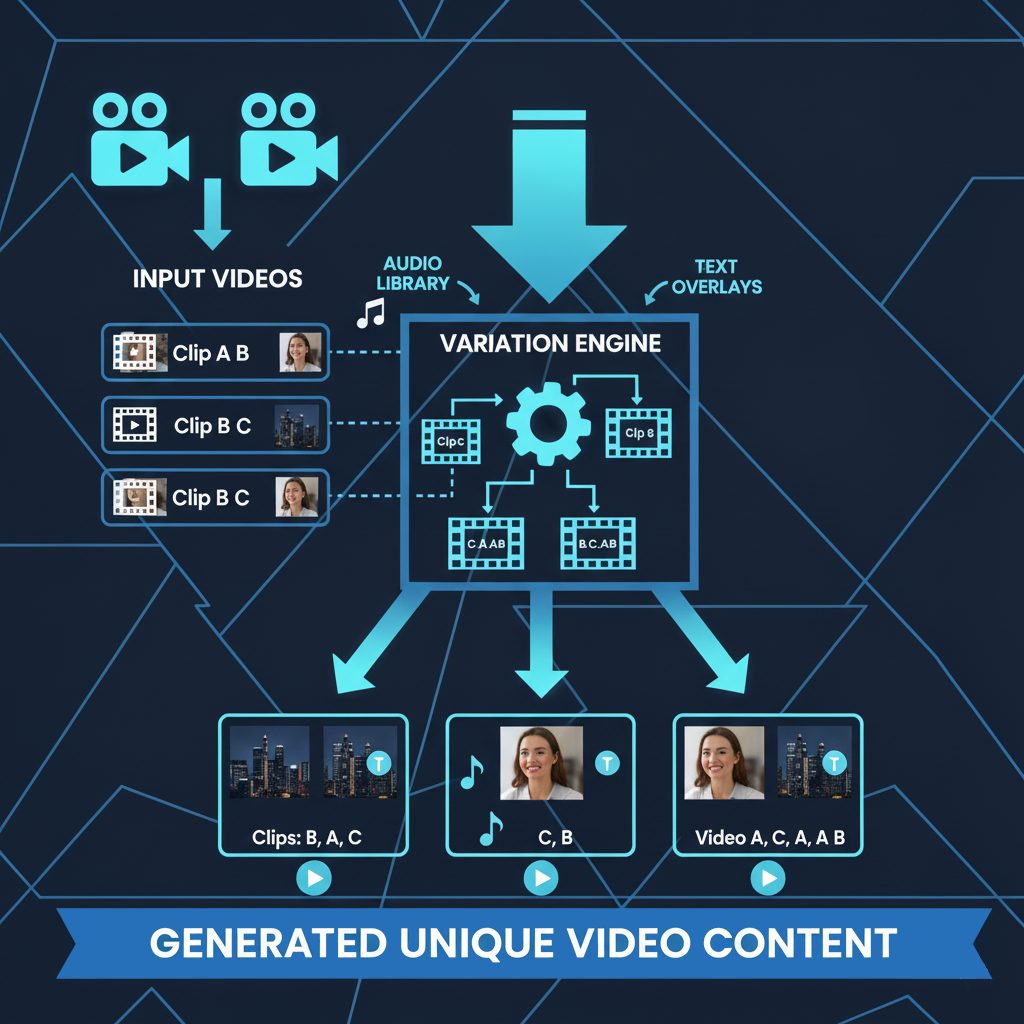
Most creative testing is done at the whole-ad level: ad A against ad B, whichever wins keeps running. It's simple, but it tells you almost nothing about why one won — was it the hook, the visual, the CTA, or some combination? Testing components instead of whole ads fixes that, and it's far cheaper to produce.
Done well, this is what turns campaign content variation from a one-off scramble into a repeatable system you can run every time performance dips.
Break the Ad Into Three Testable Parts
Every performance ad is built from three independent components:
- Hook — the first 3 seconds, responsible for stopping the scroll
- Visual/body — the product story or demo that carries the middle of the ad
- CTA — the closing instruction and offer framing
Tested as a whole ad, changing all three at once tells you the combination worked, not which piece did the work.
The Math That Makes This Worth Doing
Three hooks, four visuals, and three CTAs isn't 3+4+3 combinations — it's 3×4×3, or 36 unique ads, built from just ten core assets. That's the entire appeal of component-based testing: the combinations grow multiplicatively while the production work grows only additively.
Running the Test Without Losing the Signal
The discipline that makes this work is changing one variable at a time in a controlled subset, rather than launching all 36 combinations blind:
- Fix the visual and CTA, rotate hooks to find the strongest opener.
- Fix the winning hook, rotate visuals to find the strongest body.
- Fix both, rotate CTAs to find the strongest close.
Each stage narrows the field instead of drowning the account in undifferentiated spend across three dozen ads at once.
Why This Usually Doesn't Get Done Manually
Producing ten distinct components — let alone 36 combinations — by hand means ten separate editing passes minimum, often more once voiceover and per-platform formatting are factored in. That production cost is the real reason most teams settle for whole-ad testing instead: not because it's better, it's because it's cheaper to make two ads than thirty-six.
Making the Combinatorics Actually Affordable
Genyad generates hook, script, and voiceover variations directly from existing footage and recombines them automatically, so testing at the component level doesn't require a proportional jump in editing time.
Want to see 36 combinations from footage you already have? Start with your existing library instead of a fresh shoot.