
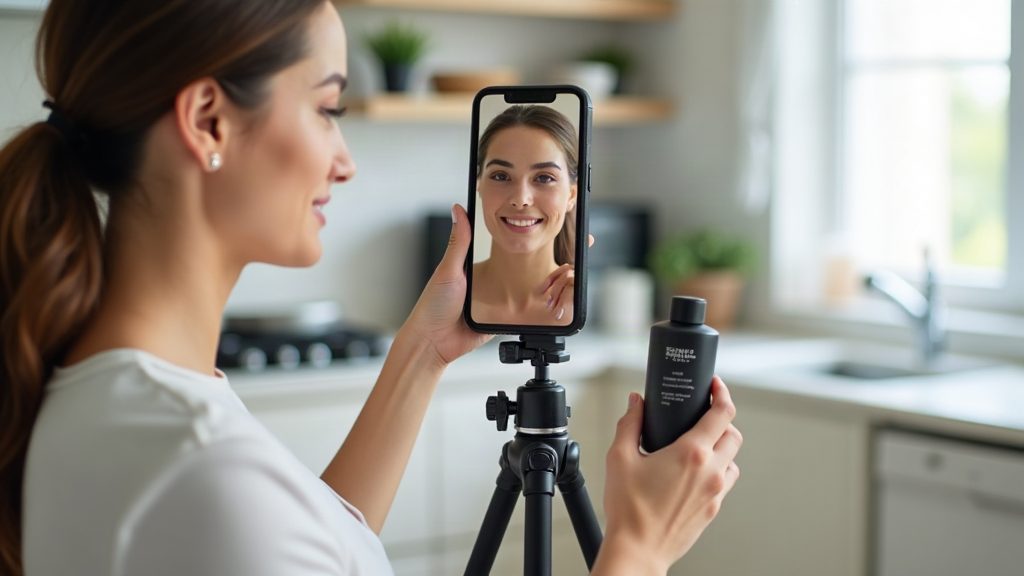
There are two kinds of AI tool for UGC-style video ads without hiring creators: tools that generate a person who reads your script (Arcads, MakeUGC, Creatify, HeyGen), and tools that turn real customer or product footage you already have into many ads (Genyad). Pick the first if you have no footage and need a face on screen; pick the second if you already have customer videos and want them to look and sound real. Whichever you choose, judge it on cost per finished ad, script control and how the ads perform against a real creator video in your own account.
What are the AI tools for UGC-style ads?
The tools below are the ones paid social teams most often shortlist. Prices are the publicly listed entry plans as of September 2026; check each site before buying.
| Tool | What it starts from | What you get | Entry price |
|---|---|---|---|
| Arcads | Your script | AI actors delivering it | €100/month for 10 videos |
| MakeUGC | Your script | AI actors delivering it, roughly $6 to $10 per video | $39/month |
| Creatify | A product URL | URL-to-video with AI avatars | $39/month |
| HeyGen | A script | Avatar and translation video | $29/month |
| Genyad | Footage you already own (customer clips, product video, old ads) or a product photo | Many variations, each with its own script, shot selection, voiceover and captions | Free for 5 variations, then €29 for 15 |
| Icon (not AI) | A brief | Real creators filming to it | $399 for six ads |
Icon is on the list as the baseline: it is what "hiring creators" costs when a platform handles the logistics, and it is the comparison every AI option has to beat.
What should you look for in an AI UGC ad generator?
Seven things decide whether a tool earns its place in a paid social stack. The first three matter most.
- Cost per finished, usable ad. Divide the monthly price by the ads you would actually run, not the ads the plan allows. Discard rates on generated actors can be high once you watch them on a phone.
- Script control. Can you write the hook line yourself, change one sentence and regenerate, and keep everything else? UGC lives or dies on the first line.
- How real it reads at feed speed. Watch every ad on a phone, sound off and sound on. Hands, product handling and lip sync on close-ups are where generated people still give themselves away.
- Variation depth. Ten ads that differ only in the actor or the background colour count as one ad to Meta's delivery system. You want different hooks, angles and openings.
- Formats. 9:16 for Reels, Stories and TikTok, 4:5 for the feed, captions burned in.
- Rights and disclosure. Who owns the output, whether the actor's likeness is licensed for ads, and how the platforms you advertise on want realistic AI-generated people labelled.
- What happens to your footage. If you upload customer videos, read how the tool stores and uses them. We wrote up the questions to ask in what happens to your footage in an AI ad tool.
Generated actors or real footage: which works better?
It depends on what you have. Generated actors fill a gap when a brand has no people on camera at all, and they are fast to localise into other languages. Real customer footage carries proof that is hard to fake: the actual product, actual hands, an unscripted reaction.
Our comparison of AI UGC and real UGC goes through where each one wins. The short version: test both in the same campaign with the same offer, and judge them on hook rate and cost per result, not on how they look in a review meeting. And if you already have a folder of creator or customer clips, the cheaper move is usually to get more ads out of them. One clip can become eight distinct ads, as we show in how to turn one UGC clip into eight ads.
Can you make UGC-style ads from product photos?
Yes, with limits. An image-to-video tool can animate a product photo into a short clip, with a slow push-in, a rotation, a scene around it. That works well as the product shot inside a UGC-style ad, under a voiceover or text that sounds like a customer talking. It does not convincingly fake a person using the product.
So the practical recipe for an ecommerce brand with photos but no video is: animate the product shots, write the script as a customer would say it, add a natural voiceover and captions, and keep the claims honest. Our guide to product photos to video ads shows what animates well and what fails, and Genyad's image-to-video ad generator does the animation step from a single photo.
How do AI UGC ads compare with creator videos on cost?
On price per ad, AI wins easily: a generated actor ad costs a few dollars to around ten, against roughly $66 per ad at Icon's six-for-$399 entry offer, and more for creators you hire directly. On performance, there is no general answer worth quoting. It varies by category and by how good the script is.
That is why the useful comparison is your own. Run three AI ads and three creator ads with the same offer for a week, then compare cost per result. If the creator ads win by more than the price difference, keep paying creators and use AI or footage tools to make more versions of their best clips. Our UGC ad maker page shows how Genyad does that second part.
Frequently asked questions
What is the best AI tool for UGC ads without hiring creators?
If you have no footage, an AI actor tool such as Arcads or MakeUGC is the fastest way to get a person on screen reading your script. If you have customer or product videos already, a footage tool such as Genyad makes more convincing ads from them, because the people and the product are real.
Do AI UGC ads perform as well as real creator ads?
Sometimes, and it varies by category and script. The only reliable answer is a test in your own account: same offer, same budget, a few of each, judged on hook rate and cost per result after a week.
Are AI UGC ads allowed on Meta and TikTok?
Generated ads can run on both, but each platform has rules about disclosing realistic AI-generated people and about claims. Read the current advertising policies of the platforms you use before launching, and make sure the tool's actor likenesses are licensed for advertising.
How do I make UGC ads from product photos?
Animate the product photos into short clips with an image-to-video tool, then build the ad around them with a customer-style script, a natural voiceover and burned-in captions. Use the animated shots as the product proof rather than trying to fake a person using it.
How much do AI UGC ads cost?
Entry plans run from about $29 to €100 a month as of September 2026, which works out at a few dollars to around ten per generated actor video. Footage-based tools are priced per variation instead; Genyad's free plan makes five, with paid packs from €29 for 15.