
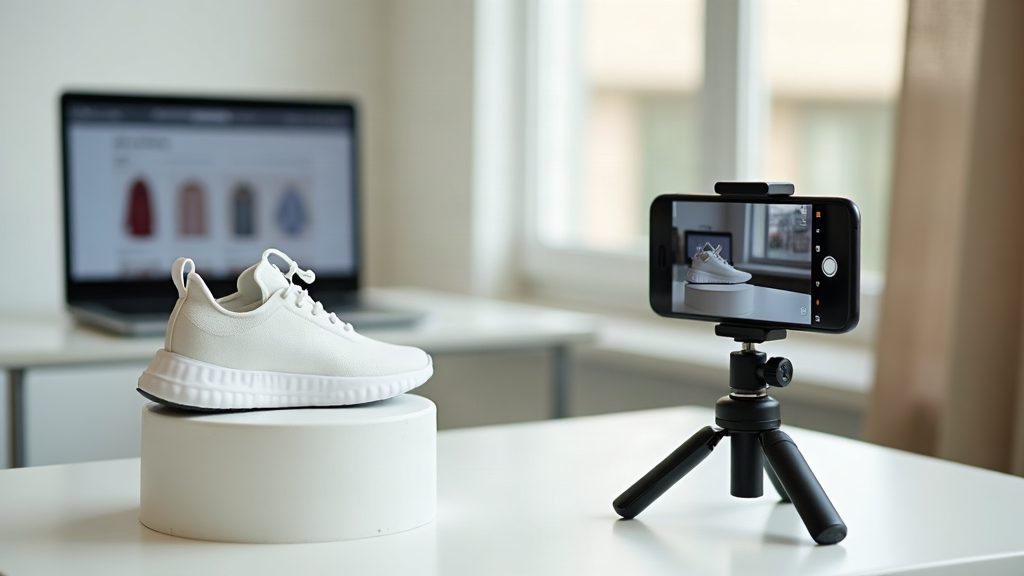
The best AI video ad generator for an ecommerce brand depends on what it starts from: a product URL (Creatify), a catalogue feed (Predis.ai, Marpipe), a design template (Plainly, Abyssale), footage the brand already has (Genyad), or a generated presenter (Arcads, HeyGen). Choose by your starting material first and price second, because a tool built for a different input will make you work around it on every ad. For TikTok and Instagram, also check that the output is genuinely ready to run: 9:16, safe zones respected, captions burned in, and a hook in the first two seconds.
Which AI video ad generators suit ecommerce?
Entry prices are the publicly listed plans as of September 2026.
| What you start from | Tool | What it does | Entry price |
|---|---|---|---|
| A product page URL | Creatify | URL-to-video with AI avatars | $39/month |
| A product feed | Predis.ai | Social posts and ads generated from the feed | $32/month |
| A large catalogue | Marpipe | Catalogue-driven creative testing, priced per SKU | $199/month for up to 500 SKUs |
| A design template | Plainly | Data-driven After Effects template rendering | $69/month |
| A design template | Abyssale | Template-driven multi-format ad generation | $15/seat/month |
| Footage you own, or a product photo | Genyad | Many variations, each with its own script, shot selection, voiceover and captions | Free for 5, then €29 for 15 |
| A script, no footage | Arcads | AI actors delivering your script | €100/month for 10 videos |
| A script, no footage | HeyGen | Avatar and translation video | $29/month |
| Nothing automated | CapCut | Manual short-form editor | Free, $9.99/month for Pro |
How to read the table
- Big catalogue, many SKUs: feed and catalogue tools scale across products, but each ad tends to follow the same pattern.
- A few hero products with real video: a footage tool gets more distinct ads from what you shot.
- No video and no people: URL-to-video or avatar tools fill the gap fastest.
Why do ecommerce brands need so many video ads?
Because ecommerce creative wears out quickly. The median ad lifespans in our 2026 ad fatigue benchmark (Prestyj 2026, via Web Tonic) are short across product categories:
| Category | Median ad lifespan | CTR drop at fatigue |
|---|---|---|
| Food and beverage | 9 days | 40 percent |
| Fashion | 11 days | 35 percent |
| Beauty and skincare | 14 days | 28 percent |
| Electronics | 16 days | 31 percent |
| Health and supplements | 18 days | 22 percent |
| Home and garden | 21 days | 19 percent |
A fashion brand whose ads last eleven days needs a new batch every couple of weeks just to stand still. The same report notes that brands running 15 to 50 or more new variants a month extend campaign life three to five times compared with quarterly refreshers (Prestyj 2026, via Web Tonic). The tool question for ecommerce is really a volume question: which one produces enough distinct ads from the material you have.
What makes a TikTok or Instagram video ad "ready to run"?
A generated video is only ready to run if you can upload it without another editing pass. Check five things:
- Vertical 9:16 at 1080x1920 for TikTok, Reels and Stories, and a 4:5 version for the Instagram feed. Our TikTok ad specs and Instagram Reels ad specs list the details.
- Safe zones respected. Price, product and captions must sit clear of the interface overlays at the top and bottom.
- Captions burned in, because most feed views start muted.
- A hook in the first two seconds: the product in use, the result, or the offer, not a logo.
- Platform-native length. Short for TikTok and Reels; a longer cut can work in the feed for retargeting.
Many tools export one ratio and leave the rest to you. Genyad's multi-format export renders each variation at 9:16, 4:5, 1:1 and 16:9 with the safe zones for each placement.
How can ecommerce brands make video ads from existing product footage?
Treat the footage as a library, not a finished ad. Product demos, unboxings, customer clips and old ads all contain usable shots. A footage tool transcribes and tags them, then builds each new ad from the clips that fit its script.
That is the approach Genyad takes for ecommerce video ads: upload once, then each variation gets a fresh script, shot selection, voiceover in one of six languages, captions, and exports in 9:16, 4:5, 1:1 and 16:9. If you only have photos, the product photos to video ads guide covers what animates convincingly. For how to sequence ads from first view to purchase, see our ecommerce video ad strategy.
Frequently asked questions
What is the best AI video ad generator for a Shopify store?
It depends on your starting material. With a product URL and no video, a URL-to-video tool such as Creatify is quickest. With a large catalogue, a feed tool such as Predis.ai fits. With real product or customer footage, a footage tool such as Genyad makes more distinct ads from it.
Which AI tools make ready-to-run ads for TikTok and Instagram?
Any tool that exports 9:16 and 4:5 with safe zones respected and captions burned in. Check a sample export on a phone before buying: if you have to re-crop or re-caption it, it is not ready to run.
How many video ads does an ecommerce brand need?
Enough to replace ads as they fatigue, which in ecommerce can be every 9 to 21 days depending on category. For Meta we recommend 8 to 20 live variations per active campaign as a working range.
Can AI make video ads from product photos?
Yes. Image-to-video tools animate a product photo into a short clip, which works well as the product shot in an ad with a voiceover and captions. It does not convincingly show a person using the product.
Are AI video ads good for ecommerce?
They are good for volume and testing: more versions of an ad, faster, at a lower cost per ad. Whether they beat your best human-made ad is something to test in your own account, with the same offer and budget for each.